
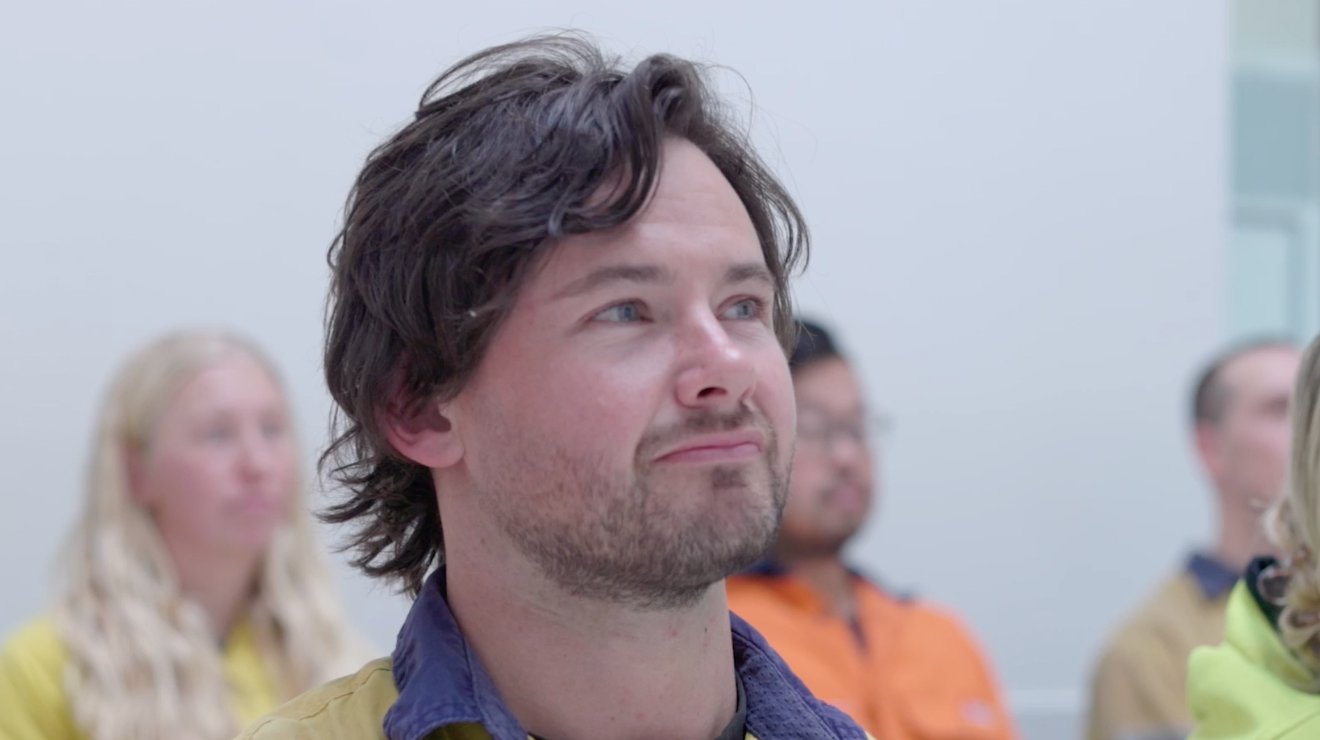
Psychosocial safety training for FIFO and high-risk workplaces in Western Australia
Psychosocial safety is now a legal obligation for every employer in Australia. Under the Work Health and Safety Act 2020 (WA) and national WHS legislation, organisations must proactively identify and manage psychosocial hazards - including sexual harassment, bullying, poor leadership, and high job demands - with the same rigour as physical safety risks.
We Are Consulting delivers practical, evidence-based psychosocial safety training and workshops specifically designed for FIFO, mining, resources, and high-risk industries across Perth and Western Australia.
-
WHAT IS A PSYCHOSOCIAL HAZARD?
Psychosocial hazards are aspects of work that can cause psychological or physical harm. In FIFO and high-risk environments, the most common psychosocial hazards include:
→ Sexual harassment and gendered aggression
→ Bullying, intimidation, and hostile workplace behaviours
→ Isolation, fatigue, and the mental health impacts of remote work
→ Poor leadership and lack of role clarity
→ High job demands with low support or control
→ Power imbalances in blended or contractor workforces
Under Australian WHS legislation, employers have a positive duty to prevent these hazards from occurring - not simply respond after the fact.
-
WHAT DOES PSYCHOSOCIAL SAFETY TRAINING INVOLVE?
Our psychosocial safety workshops translate legal obligations into practical leadership behaviours and team-level skills. We don't deliver jargon-heavy compliance modules - we deliver sessions that actually change how people lead, communicate, and respond to risk.
Our workshop - Psychosocial Safety & Risk: From Compliance to Culture - is a half-day session designed for leaders, HR managers, HSE teams, and executive groups.
Participants leave with:
✓ A clear understanding of their organisation's legal obligations under the WHS Act
✓ Practical tools to identify and assess psychosocial hazards in their specific environment
✓ Leadership behaviours that reduce risk and build psychologically safe cultures
✓ A framework for moving from reactive complaint-handling to proactive prevention
-
WHO NEEDS PSYCHOSOCIAL SAFETY TRAINING IN WESTERN AUSTRALIA?
Any organisation operating in Western Australia with a duty of care to their workers - which is every employer.
Psychosocial safety training is particularly critical for:
→ Mining and resources companies with FIFO or remote workforces
→ Construction and infrastructure organisations
→ Organisations undergoing regulatory scrutiny or responding to incidents
→ HR, HSE, and leadership teams navigating the WHS Act 2020 (WA)
→ Organisations meeting their Positive Duty obligations under the Respect@Work Act 2022
-
WHAT ARE YOUR OBLIGATIONS UNDER THE WHS ACT?
The Work Health and Safety Act 2020 (WA) and the Work Health and Safety (General) Regulations 2022 require employers to:
→ Identify psychosocial hazards at work
→ Assess and control the risks those hazards create
→ Consult with workers about psychosocial risks
→ Review and update controls regularly
The Positive Duty under the Sex Discrimination Act (via the Respect@Work Act 2022) additionally requires employers to take proactive, reasonable measures to prevent sexual harassment - one of the most significant psychosocial hazards in FIFO environments.
We Are Consulting helps organisations understand exactly what these obligations mean in practice and build the capability to meet them
-
PSYCHOSOCIAL SAFETY TRAINING DELIVERED IN PERTH AND ACROSS WESTERN AUSTRALIA
We Are Consulting is based in Perth, Western Australia, and delivers psychosocial safety workshops on-site at FIFO locations, at mining sites, at corporate offices, and at venues across the Perth metro area.
All workshops can be delivered to:
→ Leadership and executive teams
→ HSE and HR professionals
→ Site supervisors and frontline managers
→ Whole-of-workforce groups
Contact us to discuss your location, roster, and workforce size
Frequently Asked Questions
-
Our workshops cover sexual harassment prevention, psychosocial safety and risk management, respectful workplace communication, and culture change. Each session is designed specifically for organisations in high-risk industries including mining, resources, construction, and FIFO environments.
Our four core workshops are: Preventing Sexual Harassment in FIFO & High-Risk Workplaces; Psychosocial Safety & Risk: From Compliance to Culture; Respect, Boundaries & Workplace Communication; and Culture by Design: Understanding What Shapes Behaviour.
-
All of our core workshops are half-day sessions, typically three to four hours. Full-day programs are also available and are particularly popular for leadership teams who want to combine two workshop topics into a single site visit.
We also deliver shorter keynote and conference presentations from 20 minutes to 90 minutes, depending on your event format and what you need the room to walk away with.
-
Yes, and this is one of our core specialisations. We regularly deliver workshops at FIFO villages, mine sites, remote worksites, and shift-based environments across Western Australia. We understand the unique constraints of FIFO rosters, site schedules, and workforce demographics, and we design our delivery accordingly. Travel to regional and remote sites is factored into our program scope - get in touch to discuss your location.
-
Our workshops are designed for groups of up to around 30 participants to ensure genuine discussion and engagement - not a lecture.
For larger organisations or multi-site delivery, we run multiple sessions across teams, departments, or sites. We also offer whole-of-workforce programs for organisations that need to reach everyone from frontline workers to executive teams.
-
Always. We do not deliver off-the-shelf compliance modules. Every program we run includes a pre-session consultation to understand your organisation's context, workforce demographics, existing culture, and specific risk areas. The scenarios, language, and examples we use in the room are drawn from your industry and your environment - which is why our programs land with people who usually tune out in training.
-
Our primary delivery model is face-to-face, because we believe genuine behaviour change happens in the room - particularly in high-risk industries where the relational dynamics are complex. That said, we can discuss hybrid options for organisations with dispersed workforces or where on-site delivery isn't feasible. Reach out and we'll work out what's practical for your situation.
-
Workshops are standalone half-day or full-day sessions designed to create immediate impact and build momentum. They're the fastest way to get your team engaged and are often where organisations start. Consulting programs are longer-term engagements that go deeper — we assess your organisation's culture and risk profile, design and deliver a bespoke training program, and then review outcomes and provide recommendations for continuous improvement. Many organisations begin with a workshop and expand into consulting once they've seen how our work lands with their people.
-
Our consulting model follows three stages.
In Tier 1 - Assess, we conduct leadership consultations, anonymous staff surveys, and risk assessments to understand what's actually happening in your organisation beneath the surface.
In Tier 2 - Educate, we design and deliver a bespoke training program built entirely from your Tier 1 findings - tailored to your workforce, structure, and risk environment.
In Tier 3 - Review, we collect evaluation data, analyse outcomes, and provide actionable recommendations for policies, reporting pathways, leadership capability, and ongoing culture development. The full program typically runs across five to six months, with optional ongoing advisory support.
-
Yes. While we are based in Perth and have deep expertise in the Western Australian mining and resources sector, we deliver programs nationally. We have worked with organisations across Australia including government agencies, universities, and national industry bodies. Travel and logistics are factored into program scoping - contact us to discuss your location and needs.
-
The Respect@Work Act 2022 introduced a Positive Duty on employers - meaning organisations are now legally required to take proactive, reasonable steps to prevent sexual harassment from occurring, rather than simply responding after the fact. This is a significant shift from the previous complaint-driven model. Organisations that fail to meet their Positive Duty obligations can face regulatory action from the Australian Human Rights Commission. Our programs are specifically designed to help organisations understand and meet these obligations in a way that is practical and embedded in real workplace behaviour - not just policy documents.
-
Psychosocial hazards are aspects of work that can cause psychological or physical harm — including sexual harassment, bullying, excessive workload, poor leadership, and lack of role clarity. Under Australian work health and safety laws, employers now have a legal obligation to identify and manage psychosocial hazards with the same rigour as physical safety risks. For organisations in FIFO and high-risk industries, psychosocial risk is particularly significant given the conditions of remote work, long rosters, gender imbalance, and power dynamics common in those environments. Our Psychosocial Safety & Risk workshop translates these obligations into practical leadership tools your teams can use immediately.
-
A workshop is an important step toward meeting your Positive Duty obligations and demonstrates proactive action — but compliance is an ongoing commitment, not a single event. The Positive Duty requires organisations to take measures that are proportionate to the size and nature of their workforce. For many organisations, this means a combination of training, policy review, reporting pathway improvements, and leadership accountability frameworks. Our consulting programs are designed to support organisations through that full journey. We are happy to discuss what a reasonable and defensible approach looks like for your specific organisation.
-
All programs are delivered by Kate Raston and Nicolette Beard - the co-founders of We Are Consulting. Kate holds a Bachelor of Science in Health Promotion and a Graduate Diploma in Sexology and is a qualified sexologist and advocate for gender equity. Nicolette holds a Bachelor of Science in Health Promotion and a Graduate Diploma in Education and is a trusted educator and facilitator with deep experience in public health and adult learning. Together we bring over 18 years of combined experience and have worked with more than 30,000 people across Australia. You will not be handed off to a junior facilitator - you get us, every time.
-
Most workplace training providers deliver generic, compliance-focused content that people forget by the end of the week. Our programs are different for three reasons. First, our content is built from over a decade of large-scale behaviour change education — we understand how to shift attitudes and actions, not just deliver information. Second, we specialise in FIFO and high-risk environments, which means our scenarios, language, and approach are genuinely relevant to the people in the room. Third, we are small and deliberately so — every client works directly with us, and every program is tailored to their organisation. That depth of engagement is something larger providers simply cannot replicate.
-
Yes — it is one of our primary areas of expertise. We have delivered sexual harassment prevention and respectful workplace training to mining services companies, hospitality and village management organisations operating on FIFO sites, and resources sector bodies across Western Australia. Our work in this space includes multi-site delivery programs, on-site facilitation at operating mines, and engagement with workforce demographics that are typically hard to reach through conventional training approaches. Client testimonials and case study detail are available on request.
-
The simplest first step is to book a free 30-minute consultation. We will talk through your organisation's current situation, what you are trying to achieve, and what kind of program would make the most sense for your workforce and budget. There is no obligation and no sales pressure — just an honest conversation. You can book directly through our website or email us at admin@joinweare.com.au.